Updated October 2026
Best Hiking Shoes and Boots for Flat Feet
Trails are where flat feet get found out. Every rock and root asks your arch to stabilize the foot, and a soft, flexible hiker leaves it to do that alone. These picks put structure under the arch and around the heel instead.
This page contains Amazon affiliate links. If you buy through them, I may earn a commission at no extra cost to you. See the
affiliate disclosure.
Quick picks
Five hikers with real structure underfoot, from a do-everything classic to a waterproof mid boot for ankle support.
How these picks were chosen
These are research-based picks, not a claim that I've worn every pair on this page. I compared manufacturer specifications against the features that matter most for flat feet — heel-counter firmness, midsole stability, a removable insole for orthotics, and wide-size availability — and read through patterns in verified buyer feedback. See
how I evaluate shoes and the
medical disclaimer.
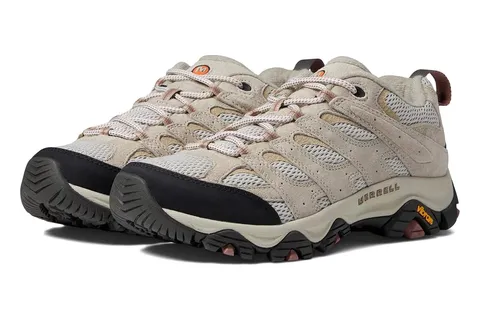
The Moab is the default recommendation for a reason: a contoured, removable footbed with a reinforced heel, an air-cushioned heel for stability, and a Vibram outsole, at a price well below most technical hikers. For flat feet, the big win is that the stock footbed is removable, so you can swap in a firmer orthotic if the built-in support isn't enough.
Why it suits flat feet
- Contoured footbed with reinforced heel cushioning
- Heel Air Cushion adds shock absorption and stability
- Removable footbed makes room for your own orthotic
- Proven, widely available design with a huge buyer base
Drawbacks
- Stock support is medium, not firm; strong overpronators may need an insert
- Not the lightest hiker for fast, long days
- Low cut leaves ankles unsupported on rough ground
Who should buy it
Day hikers with flexible flat feet who want a dependable, affordable shoe they can upgrade with an insole.
Who should skip it
Hikers carrying heavy packs on technical terrain who need a stiffer, higher boot.
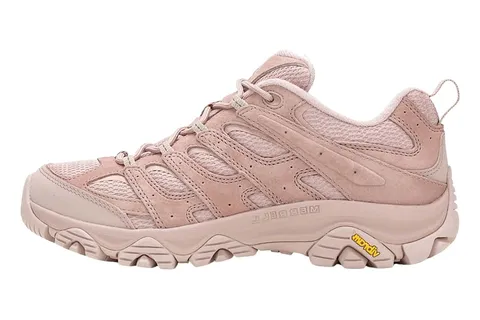
The women's Moab 3 shares the same platform: a contoured Kinetic Fit insole with reinforced heel cushioning, a protective toe cap, and a removable insole. It's built on a women's-specific last rather than a shrunk-down men's shoe, which matters for heel lockdown, and heel lockdown matters a lot when the arch is low.
Why it suits flat feet
- Same supportive, contoured footbed as the men's version
- Protective toe cap and bellows tongue keep debris out
- Removable insole for custom orthotics
- Women's-specific fit
Drawbacks
- Medium support out of the box
- Suede upper needs occasional care
- Waterproof versions run warmer in summer
Who should buy it
Women who want a versatile, supportive day hiker that's easy to customize.
Who should skip it
Anyone who needs a high-cut boot for ankle stability.
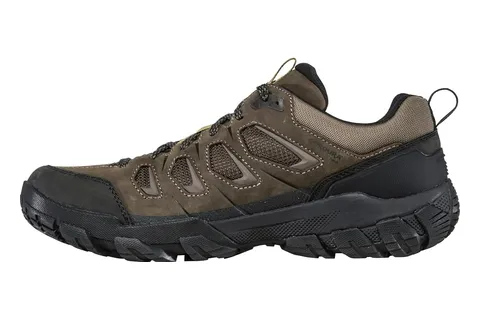
Most hiking shoes ship with a flat foam liner. Oboz is the exception: the O FIT insole has a molded shell, a deep heel cup, and a medium-to-high arch profile, closer to an aftermarket orthotic than a stock liner. Add a TPU heel counter and an 8 mm drop, and it's one of the more structured low hikers out of the box.
Why it suits flat feet
- O FIT insole with molded shell and deep heel cup
- TPU heel counter firms up heel control
- Wide sizes available
- Durable nubuck upper and heavy-duty tread
Drawbacks
- Medium-to-high arch can feel intrusive at first on very flat, rigid feet
- Heavier than mesh trail runners
- Fewer stores stock it to try on
Who should buy it
Hikers who want real arch support without buying a separate insole.
Who should skip it
People with rigid flat feet who find pronounced arch contours uncomfortable.
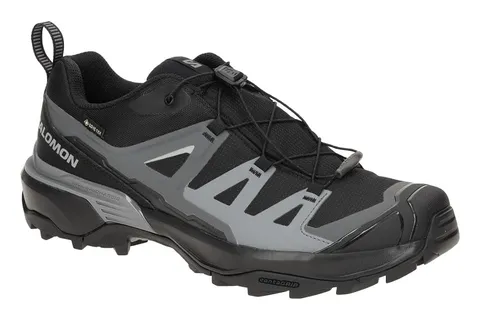
The X Ultra line is Salomon's long-running stable low hiker, and the 360 GTX is the waterproof, more cushioned take on it. It's not a motion-control shoe, but its stable platform and bungee quick-lace system hold the foot securely on mixed terrain in a low, boot-free package.
Why it suits flat feet
- Stable, cushioned platform for mixed terrain
- GORE-TEX waterproofing
- Bungee quick-lace is fast to snug down
- Low-cut and nimble compared with a boot
Drawbacks
- Less built-in arch support than the Oboz
- Narrower fit than KEEN or Merrell
- Waterproof membrane traps heat on hot days
Who should buy it
Faster hikers with mild flat feet who want a light, waterproof shoe.
Who should skip it
Wide feet, or anyone who needs firm arch support built in.
What matters in a hiking shoe for flat feet
On pavement, a flat arch mostly costs you comfort. On a trail, it costs you stability too: every uneven step gives the foot another chance to roll inward, and that strain travels into the ankle, knee, and hip. These features do the most to prevent it:
- A firm heel counter. Squeeze the back of the shoe. If it collapses easily, it won't control the heel when you land on a slanted rock.
- Torsional rigidity. Hold the heel and forefoot and twist. A shoe with a shank or a stiff midsole resists this, which is what keeps the midfoot from collapsing on uneven ground.
- A removable insole. Even the best stock footbeds are generic. A removable one means you can add an orthotic insole if you need firmer support.
- A wide enough toe box. Flat feet often splay longer and wider under load, especially on descents. A cramped forefoot causes blisters and black toenails.
- Mid or low cut? Mid-cut boots don't support your arch, but they do help ankles that roll. If that's you, go mid.
Fit tips before a long hike
Try hiking shoes on in the afternoon, wearing the socks you'll hike in, with your orthotic inside if you use one. Feet swell over a long day, and flat feet lengthen slightly as the arch drops under load, so a shoe that's snug in the morning can be tight by mile eight. Walk down a slope or a ramp in the store if you can: your toes shouldn't hit the front.
Break new shoes in on short local walks before any long trip, and if you're new to hiking with flat feet, the foot-strengthening exercises in our guide make a noticeable difference to how tired your feet feel at the end of the day.
Frequently asked questions
Are hiking boots better than hiking shoes for flat feet?
Not automatically. Boots add ankle support, which helps if your ankles roll, but the arch support comes from the footbed and midsole in either case. Many people with flat feet do best in a low hiker with a firm heel counter and a good insole, and only move to a mid boot for rough terrain or heavy packs.
Can I put my orthotics in hiking shoes?
Yes, as long as the shoe has a removable insole and enough volume. Take the stock insole out and put your orthotic in its place rather than stacking them. All five picks on this page have removable insoles.
Are trail runners OK for hiking with flat feet?
For light day hikes, a stable trail runner can work, but most are softer and more flexible than hiking shoes, which gives a flat arch less help on uneven ground. If you prefer trail runners, choose one with a firm heel counter and consider adding an insole.