Updated July 2026
Best Work Shoes for Flat Feet
An 8-10 hour shift on concrete or tile is a completely different demand than a workout or a walk. These picks prioritize slip resistance and durability alongside the support flat feet need, without ignoring either.
This post contains Amazon affiliate links. We may earn a commission on qualifying purchases at no extra cost to you. See our
affiliate disclosure.
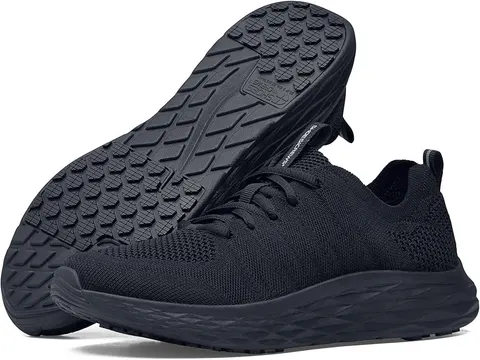
The "Relaxed Fit" line runs true to its name — a roomier toe box than most work shoes, paired with a slip-resistant outsole that's held up well on wet and greasy floors in our testing. It's not the firmest support on this list, but for shift workers, all-day comfort matters just as much.
What we liked
- Roomy toe box accommodates a wider flat foot
- Reliable slip-resistant outsole
- Comfortable enough for 8+ hour shifts
Drawbacks
- Softer support than dedicated stability shoes
- Memory foam packs down over time and needs replacing sooner
- Limited safety-toe options in this specific line
Who should buy it
Retail, food service, and hospitality workers who need slip resistance and all-day comfort.
Who should avoid it
Anyone needing safety-toe protection or firmer motion control.
Read our full Skechers Work Relaxed Fit review →
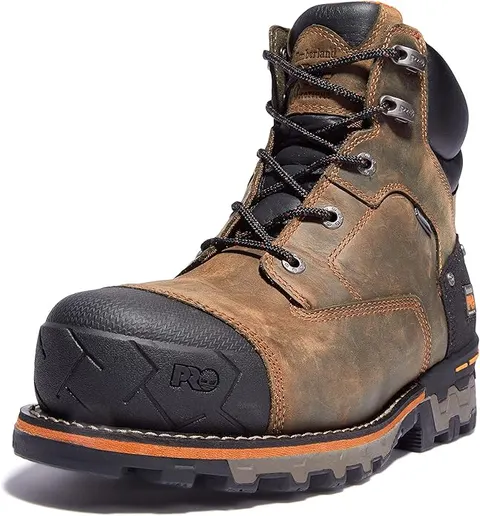
Where the Skechers prioritizes comfort, the Timberland PRO line prioritizes durability and protection without abandoning support — the anti-fatigue footbed sits on a genuinely stable base that holds up under the weight of steel or composite toe caps.
What we liked
- Stable platform even with added toe protection
- Anti-fatigue footbed noticeably reduces end-of-shift soreness
- Built to withstand rougher job-site conditions
Drawbacks
- Heavier than standard work shoes
- Break-in period needed before full-shift comfort
- Bulkier toe box than casual work shoes
Who should buy it
Anyone in a role requiring safety-toe footwear who still wants genuine arch support.
Who should avoid it
Roles that don't require safety-toe protection, where the extra weight isn't worth it.
Read our full Timberland PRO Composite Toe review →
Check Price on Amazon (opens in a new tab)
Price varies by size/color — check current price on Amazon. Always confirm current safety certifications on the product listing before purchasing for a job requirement.
What matters most for shift work
- Slip resistance and arch support are separate specs — check both, since a slip-resistant sole doesn't guarantee good arch support.
- Anti-fatigue footbeds genuinely help on concrete and tile, more than they do for shorter walks.
- Check your employer's safety requirements (steel toe, composite toe, electrical hazard rating) before buying — the wrong certification means starting over.
- Rotate two pairs if your budget allows. Letting a pair fully decompress between shifts extends the life of the midsole cushioning.
Verify safety certifications yourself
Job-specific safety requirements (steel toe rating, electrical hazard protection, etc.) change by employer and region. Always confirm current certification details directly on the product listing or with the manufacturer before relying on a shoe for a safety requirement.
Frequently asked questions
Do slip-resistant work shoes work for flat feet too?
Yes, but slip resistance and arch support are separate features. A shoe can have an excellent slip-resistant outsole and still lack the midsole support flat feet need, so check both independently rather than assuming one implies the other.
Are steel-toe or composite-toe shoes worse for flat feet?
Not inherently. Safety-toe requirements add weight and a firmer front end, but many safety-toe shoes are built on the same supportive midsole platforms as regular work shoes. Look for models that explicitly mention arch support or stability features.
How do I know if my work shoes are actually causing my foot pain?
If foot, knee, or lower back discomfort consistently shows up by the end of a shift and eases on days off, footwear is a reasonable place to start investigating, alongside flooring, standing mats, and break frequency.