Updated October 2026
Best Casual and Winter Boots for Flat Feet
Boots look sturdy, but plenty of them are just a stiff leather shell around a flat, glued-in footbed. For flat feet, the boot to buy has a shank or firm midsole for structure, a heel that holds you upright, and a footbed you can swap for real arch support.
This page contains Amazon affiliate links. If you buy through them, I may earn a commission at no extra cost to you. See the
affiliate disclosure.
Quick picks
Five boots for different jobs: an orthopedic winter boot, an everyday Chelsea, a waterproof hiker, a snow boot, and the classic 6-inch.
How these picks were chosen
These are research-based picks, not a claim that I've worn every pair on this page. I compared manufacturer specifications against the features that matter most for flat feet — heel-counter firmness, midsole stability, a removable insole for orthotics, and wide-size availability — and read through patterns in verified buyer feedback. See
how I evaluate shoes and the
medical disclaimer.
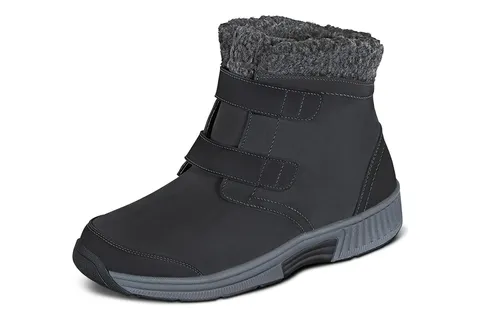
The only boot here with real arch support built in. Orthofeet ships it with an orthotic insole with anatomical arch support and lists flat feet and overpronation among its target conditions. Two hook-and-loop straps open wide for easy entry, and the leather is fully waterproof.
Why it suits flat feet
- Orthotic insole with anatomical arch support included
- Waterproof leather for rain and slush
- Straps open wide for easy on and off
- Wide toe box
Drawbacks
- Strap closure isn't as sleek as laces or a Chelsea
- Fewer ratings than the classics on this page
- Orthopedic styling won't suit everyone
Who should buy it
Women with flat feet who want a winter boot that supports the arch with no extra insert.
Who should skip it
Anyone after a fashion-first boot.
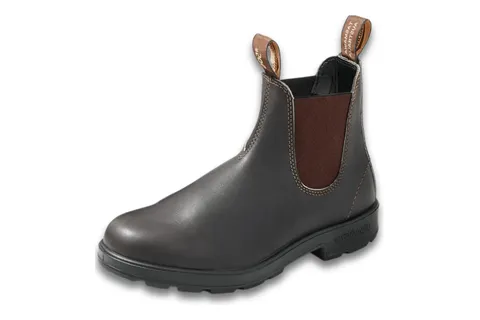
Blundstones are famous for lasting for years, and the Original 500 has two features flat feet benefit from: a steel shank that adds stability through the midfoot, and a removable footbed, so you can slot in your own orthotic. The SPS Max Comfort system cushions the heel.
Why it suits flat feet
- Steel shank adds midfoot stability
- Removable footbed fits an orthotic
- Cushioned SPS Max Comfort heel
- Pulls on easily, very durable
Drawbacks
- Stock footbed has little arch support
- Elastic sides give less lockdown than laces
- Firm until broken in
Who should buy it
Anyone who wants one do-everything boot and will add an insole.
Who should skip it
Overpronators who need a laced boot that holds the heel firmly.
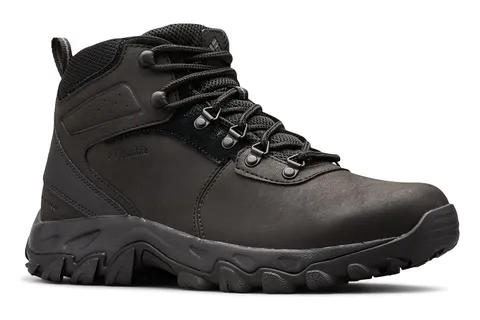
A lace-up, waterproof leather boot with a cushioned midsole and Omni-Grip traction, at a friendly price and with a huge base of buyer feedback. Lacing locks the heel down better than a pull-on, and wide sizes are available for flat feet that splay.
Why it suits flat feet
- Lace-up closure for a secure heel
- Waterproof leather and mesh
- Wide sizes available
- Affordable and widely reviewed
Drawbacks
- Moderate built-in arch support
- Not insulated for deep cold
- Heavier than a sneaker for town wear
Who should buy it
People who want a waterproof, laced boot for wet weather, trails, and errands.
Who should skip it
Deep snow and extreme cold.
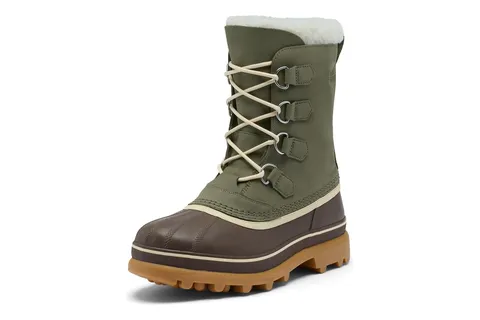
For serious winter, the Caribou's seam-sealed rubber shell keeps snow out, and its removable 9 mm felt inner boot can come out to dry. The rubber lower is firm and enclosing, which holds the heel steady on ice and slush.
Why it suits flat feet
- Seam-sealed waterproof construction
- Removable felt liner
- Firm rubber shell holds the foot steady
- Built for deep cold and snow
Drawbacks
- Heavy and bulky for walking long distances
- Liner adds volume, so a thick orthotic may not fit
- No real arch support built in
Who should buy it
Shoveling snow, cold commutes, and winter dog walks.
Who should skip it
Long walks or mild winters.
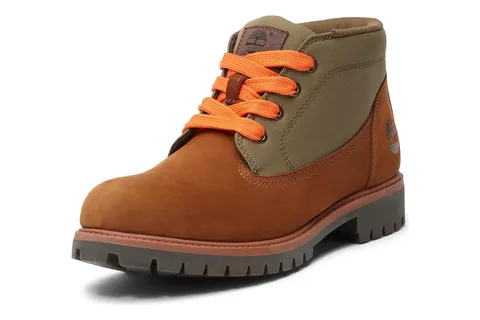
The classic 6-inch Premium (not the PRO work boot) now includes an anti-fatigue comfort system that Timberland adapted from its PRO line, plus seam-sealed waterproof leather and PrimaLoft insulation. It's a style pick first, so plan to pair it with an arch-support insole.
Why it suits flat feet
- Anti-fatigue comfort system from Timberland PRO
- Seam-sealed waterproof leather
- PrimaLoft insulation
- Wide widths available
Drawbacks
- Stiff leather needs break-in
- Limited built-in arch support
- Heavy compared with a hiker
Who should buy it
People who want the iconic boot and will add an insole.
Who should skip it
Anyone who needs support without an insert.
What to look for in a boot with flat feet
- A shank or firm midsole. A shank (steel, fiberglass, or TPU) stiffens the midfoot so it can't fold in half. That's what stops a flat arch collapsing further on uneven ground.
- A removable footbed. Most boot footbeds are flat foam. If it comes out, an arch-support insole can go in.
- Laces or straps for lockdown. Pull-on boots are convenient, but a laced boot holds the heel against the footbed better.
- Room for the insole. Try boots on with your insole in, and with the socks you'll wear in winter.
Winter-specific tips
Cold, icy ground makes people with flat feet tense their feet and shorten their stride, which tires the arch faster. Good traction matters as much as support: a slip-resistant outsole lets you walk normally. Thick winter socks also take up room, so if you're between sizes, size up and use an insole to fill the extra volume.
Frequently asked questions
Are Chelsea boots good for flat feet?
They can be if they have a shank and a removable footbed, like the Blundstone 500, so you can add arch support. Elastic sides give less heel control than laces, so strong overpronators often do better in a laced boot.
Can I put orthotics in winter boots?
Usually yes, if the boot has a removable footbed or liner. Take the stock footbed out and put the orthotic in its place. Liner boots like the Sorel Caribou have less spare room, so try them on with the orthotic in.
Are Timberland boots good for flat feet?
The classic 6-inch Premium now has an anti-fatigue comfort system, but its built-in arch support is limited. It works well for many people with flat feet when paired with a supportive insole.