Updated July 2026
Best Insoles for Flat Feet
Before you replace an entire wardrobe of shoes, a supportive insole is often the cheaper first step — and sometimes all you need. Here's what's worked for me, and how to think about choosing one.
Updated July 2026
Before you replace an entire wardrobe of shoes, a supportive insole is often the cheaper first step — and sometimes all you need. Here's what's worked for me, and how to think about choosing one.
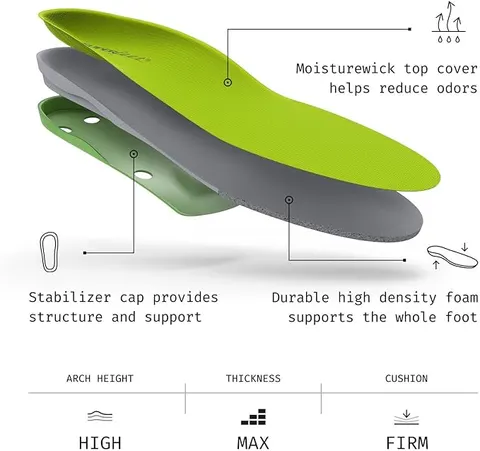
The GREEN is Superfeet's firmest, most structured everyday insole, built around a rigid plastic stabilizer cap rather than just foam. For feet that collapse significantly, that rigidity is the point — it resists flattening under load in a way softer insoles don't.
Anyone with noticeable arch collapse who needs real structure, not just cushioning.
Low-volume shoes (dress shoes, some flats) where a rigid insole won't fit comfortably.
Read our full Superfeet GREEN review →
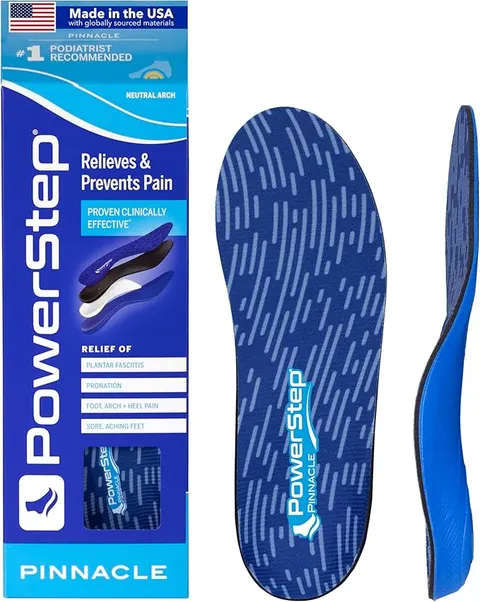
The Pinnacle splits the difference between a rigid orthotic and a soft comfort insole — a semi-flexible support shell underneath a cushioned top layer. For people who found the fully rigid options too stiff, this is usually the next thing to try.
People who want noticeable support without a rigid, orthotic-like feel.
Anyone with significant arch collapse who needs maximum structure.
Read our full Powerstep Pinnacle review →
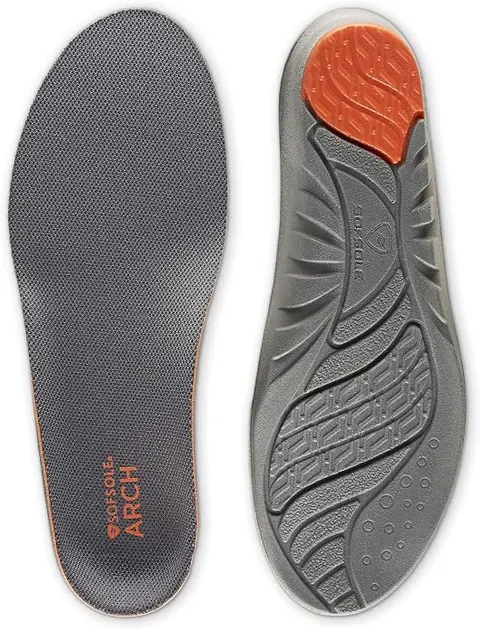
These lean more toward cushioning than structure, with a gel heel pad that's genuinely good at absorbing impact, plus a moderate arch bump rather than a rigid shell. They're a reasonable low-cost starting point if you're not sure how much support you actually need yet.
Budget shoppers with mild flat feet, or anyone testing whether insoles help before spending more.
Anyone who has already tried light support and needs something firmer.
Read our full Sof Sole Plantar Fasciitis Insoles review →
Over-the-counter insoles, like the three above, are designed to fit a wide range of feet reasonably well at a fraction of the cost of custom orthotics. For most people with mild-to-moderate flat feet, that's genuinely enough. Custom orthotics, molded to your foot by a podiatrist, make more sense when:
If you're dealing with persistent pain rather than general fatigue, that's a reasonable point to involve a podiatrist rather than keep testing insoles on your own.
Insoles work best inside a shoe that already has a reasonably stable base — see our best shoes for flat feet guide if you're shopping for both at once. And if you're ordering from a brand with unfamiliar sizing, our shoe size conversion chart can help you get the shoe volume right before you add an insole. If you're wondering whether it's worth skipping OTC insoles altogether for a custom orthotic, see our custom vs. over-the-counter orthotics guide.
Many people with flat feet find that a supportive insole reduces arch and heel fatigue, especially during long periods of standing or walking. Results vary by person, and insoles work best paired with a shoe that already has a stable base rather than a soft, unsupportive one.
Not always. The shoe needs enough internal volume to fit an insole without crowding your toes, and a removable stock insole helps, since you'll usually swap it out rather than stack the new one on top. Very low-volume shoes, like some dress shoes, may not have room for a thicker insole.
Over-the-counter insoles come in generic shapes and sizes designed to fit a range of feet reasonably well, at a much lower cost. Custom orthotics are molded to your specific foot by a podiatrist or orthotist, which can better address significant or asymmetric arch collapse, but at a considerably higher price.
Most over-the-counter insoles hold their support for roughly 6-12 months of regular use, though this varies with your weight, activity level, and how many pairs of shoes you rotate them between. If the arch support feels flattened or your old symptoms return, it's usually time to replace them.
No. Insoles manage symptoms and support your foot while you're wearing them; they don't change your underlying bone or tendon structure. That's true of custom orthotics as well as over-the-counter insoles.
A firmer arch support can feel noticeable or even mildly uncomfortable for the first few days as your foot adjusts, which is common. Sharp pain, numbness, or discomfort that doesn't ease after a week or two is not normal and is a reason to stop using that insole and reassess.

I'm 32, based in Yerevan, Armenia, and I have grade 2 flat feet myself. Every review, guide, and comparison on this site is based on my own first-hand experience shopping for and wearing footwear, not clinical training. Read more about my approach, or see my medical disclaimer.