Diagnosis guide
What Hurts? Start From the Pain, Not the Shoe
Instead of "what shoe do I want," a more useful starting question is often "what actually hurts, and where." Flat feet and overpronation connect to different pain locations in different ways — here's how to think through each one.
This is not a medical diagnosis
I have flat feet myself, not a medical degree. This page explains commonly reported mechanical connections between flat feet and pain location, not a substitute for a podiatrist or doctor — especially for pain that's severe, sudden, or doesn't improve. See our
medical disclaimer.
Heel pain
Common cause with flat feet: plantar fasciitis is the most frequent culprit — inflammation of the band of tissue running along the bottom of the foot from the heel to the toes. A collapsed arch stretches this band more than a supported one does, especially first thing in the morning or after standing up from rest.
What may help: firm heel-cup support and targeted cushioning. Start with our insoles guide, see our flat feet vs. plantar fasciitis guide to understand how the two relate, or go straight to our best shoes for plantar fasciitis and flat feet if that's your specific situation.
Arch pain
Common cause with flat feet: direct strain on the posterior tibial tendon and surrounding arch tissue from a foot that flattens more than it should under load, especially over long periods of standing or walking.
What may help: structured arch support, either from the shoe itself or an aftermarket insole. If you're not sure how much structure you need, our Shoe Finder quiz narrows it down in a minute, browse the insoles guide directly, or see our custom vs. over-the-counter orthotics guide if you're weighing a bigger investment.
Common cause with flat feet: a flatter foot often redistributes more pressure toward the forefoot during push-off, which can contribute to discomfort under the ball of the foot (sometimes called metatarsalgia) over time, especially in a shoe with a narrow or unsupportive toe box.
What may help: a wider toe box and a shoe that doesn't force weight forward more than necessary. Check width options in our shoe database or the width-sizing section of our size chart.
Shin splints
Common cause with flat feet: overpronation changes how the lower leg absorbs impact, which can increase strain on the muscles and tendons along the shin, particularly during running or a sudden increase in activity.
What may help: a stability running shoe rather than a neutral one, and not increasing mileage too quickly. See our running shoe guide and the stability-vs-motion-control section of our stability comparison.
Knee pain
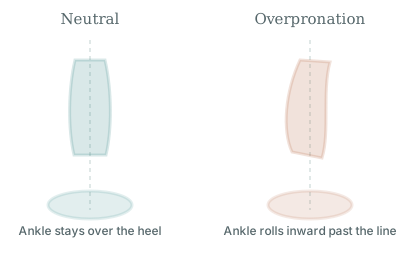
Common cause with flat feet: excess inward rolling of the ankle during overpronation can pull the knee slightly out of its ideal tracking alignment, which is a recognized (though not universal) contributor to anterior knee pain in some people.
What may help: motion-control or firm stability footwear that limits the ankle roll driving the knee's misalignment. Our running shoe comparisons cover the firmness spectrum in more detail, or see our flat feet and knee pain guide for the full mechanism.
Hip or lower back pain
Common cause with flat feet: the same misalignment that can affect the knee sometimes carries further up the kinetic chain to the hip and lower back, especially with long periods of standing or walking on hard surfaces.
What may help: supportive footwear for whatever activity causes the most standing or walking time in your day — see our work shoe guide if that's shift work, or walking shoe guide for daily walking and errands.
Frequently asked questions
Can flat feet really cause knee or back pain?
Indirectly, yes, for some people. Uncontrolled overpronation changes how the lower leg rotates during walking and running, which can alter alignment up the kinetic chain through the knee and hip. It's not universal or guaranteed, and plenty of other factors contribute to knee and back pain, but it's a recognized contributing pathway worth ruling out.
When should I see a doctor instead of just changing shoes?
See a medical professional if pain is severe, sudden, doesn't improve after a few weeks of trying supportive footwear, involves visible swelling or numbness, or follows a specific injury. Shoes and insoles can help with mechanical strain, but they don't diagnose or treat underlying medical conditions.
Will new shoes fix my foot pain immediately?
Not usually immediately. Most people need a few weeks of consistent wear to feel a real difference, and some pain (especially plantar fasciitis) responds better to a combination of supportive footwear, stretching, and time than to footwear alone.