Updated July 2026
Best Shoes for Bunions and Flat Feet
Flat feet put extra outward pressure on the big toe joint, which is part of why bunions and flat feet so often show up in the same person. These picks give the joint room without giving up arch support.
This post contains Amazon affiliate links. We may earn a commission on qualifying purchases at no extra cost to you. See our
affiliate disclosure.
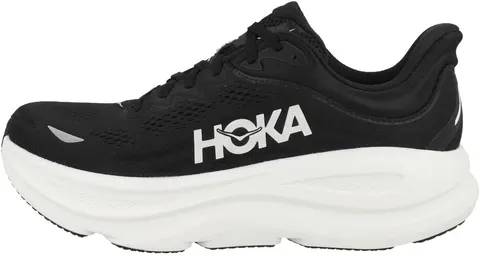
A genuinely wide, rounded toe box that doesn't taper sharply toward the big toe, which matters more for bunion comfort than almost any other single design feature.
What we liked
- Rounded toe box avoids pressure on the bunion joint
- Soft upper material flexes rather than digging in
- Maximal cushioning reduces overall foot fatigue
Drawbacks
- Less structured arch support than a dedicated stability shoe
- Tall stack height feels unstable to some wearers
- Bulky look
Who should buy it
Anyone whose bunion pain is aggravated by any snugness across the forefoot.
Who should avoid it
People needing firm, structured arch support above all else.
Read our full Hoka Bondi review →
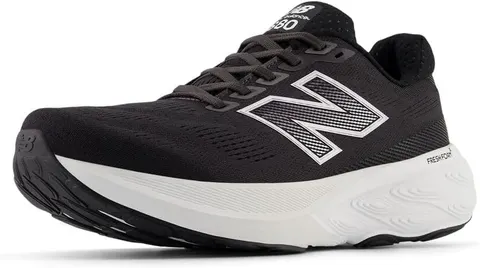
Combines a genuine wide-width option with real arch support, which matters since a bunion-friendly toe box alone doesn't solve the flat-foot half of the problem.
What we liked
- True wide and extra-wide options
- Supportive arch, not just a soft upper
- Durable enough for daily wear
Drawbacks
- Higher price point
- Break-in period for the upper material
- Bulkier than minimal lifestyle shoes
Who should buy it
Anyone needing both bunion room and genuine arch support in one shoe.
Who should avoid it
Anyone wanting a lightweight athletic shoe over a supportive daily one.
Read our full New Balance 990 Series review →
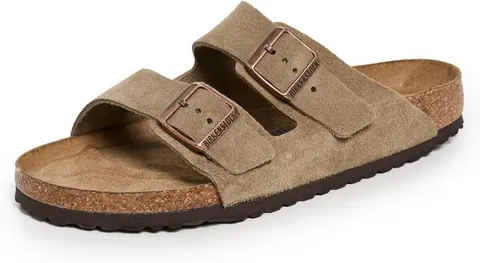
The adjustable straps let you fully customize where pressure sits across the forefoot, which is useful for a bunion that's uncomfortable with any fixed structure pressing on it.
What we liked
- Fully adjustable strap placement avoids the bunion entirely
- Contoured cork footbed offers real arch shaping
- Breathable, open design reduces heat and friction
Drawbacks
- Open-back design isn't right for every setting
- Break-in period for the cork footbed
- Less structured support than a closed athletic shoe
Who should buy it
Warmer climates or casual settings where an open sandal is practical.
Who should avoid it
Anyone needing closed-toe protection or firm structured support.
Read our full Birkenstock Arizona review →
Why bunions and flat feet overlap
A bunion forms when the big toe joint is pushed outward over time, and a collapsed arch changes how weight travels across the forefoot in a way that increases exactly that kind of pressure. It's not the only cause of bunions — genetics and footwear history both play a role — but flat feet are a well-documented contributing factor, which is why treating the two together, rather than picking shoes for one and hoping the other works out, tends to give better results.
The core tension is that shoes built for aggressive arch support often use a more structured, narrower last through the forefoot, while shoes built for bunion comfort often skip real arch support entirely. The picks above were chosen specifically because they don't force that trade-off.
What actually matters for this combination
- A wide, rounded toe box that doesn't taper sharply toward the big toe — this is the single biggest factor in bunion comfort.
- Minimal seams or overlays directly over the bunion joint, since stitching and material overlaps are common friction points.
- Genuine arch support that doesn't rely on a narrow, structured last to deliver it.
- Soft, flexible upper materials like mesh or soft leather that can flex around the joint rather than pressing into it rigidly.
When shoes aren't enough
For a mild, early-stage bunion, the right shoe can meaningfully reduce pain and slow progression. For a severe or rapidly worsening bunion, footwear changes alone won't reverse the joint deformity, and it's worth a podiatrist consultation about other options. See our
medical disclaimer for where this site's guidance ends.
Frequently asked questions
Can the right shoes fix a bunion?
The right shoes can meaningfully reduce pain and may slow how quickly a mild bunion worsens, but they generally can't reverse an existing bunion deformity. For a severe or worsening bunion, a podiatrist consultation is worth having alongside footwear changes.
Do I need a wide shoe if I have a bunion but not wide feet otherwise?
Often yes, specifically at the forefoot. A bunion pushes the big toe joint outward, which can need extra width right at that point even if the rest of your foot measures as standard width.
Are sandals better than closed shoes for bunions?
Not universally, but an adjustable sandal like the Birkenstock Arizona can be more comfortable for some people because you control exactly where the straps sit relative to the bunion. Closed shoes with a wide, rounded toe box work well too, and offer more protection.