Updated July 2026
Best Shoes for Plantar Fasciitis and Flat Feet
Flat feet and plantar fasciitis show up together often enough that treating them as separate problems usually backfires — a shoe that fixes one can make the other worse. These picks are chosen for both at once.
This post contains Amazon affiliate links. We may earn a commission on qualifying purchases at no extra cost to you. See our
affiliate disclosure.
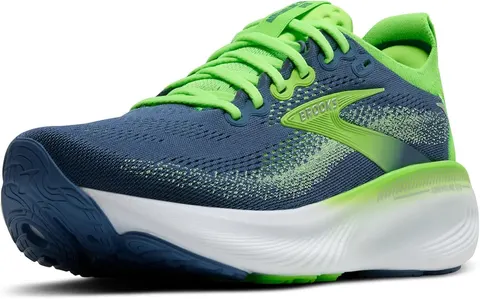
Plantar fasciitis needs a firm, supportive base under the arch so the fascia isn't doing the stabilizing work itself, and flat feet need the same thing for a different reason. The Adrenaline GTS's GuideRails support hits both needs without feeling like a medical device.
What we liked
- Firm enough arch support to rest the plantar fascia
- Comfortable for all-day wear, not just workouts
- Wide width available for swollen or wider feet
Drawbacks
- Not the softest heel strike for acute flare-ups
- Firmer than people expect coming from soft sneakers
- Overkill if your fasciitis is already resolving
Who should buy it
Anyone managing both flat feet and ongoing plantar fasciitis who needs one shoe for daily wear.
Who should avoid it
Acute flare-ups needing maximum heel cushioning over arch support.
Read our full Brooks Adrenaline GTS review →
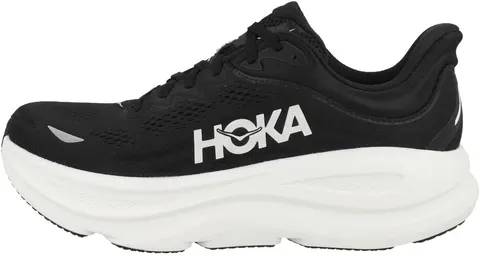
When the heel itself is the main pain point, the Bondi's thick, soft midsole absorbs impact before it reaches the fascia's attachment point, which is often the most useful thing during an active flare-up.
What we liked
- Exceptional heel cushioning for acute pain
- Rocker sole reduces strain through push-off
- Roomy toe box accommodates swelling
Drawbacks
- Less structured arch support than a true stability shoe
- Tall stack height feels unstable to some wearers
- Bulky look, not for dressier settings
Who should buy it
People in an active plantar fasciitis flare-up who need maximum shock absorption right now.
Who should avoid it
Anyone whose main issue is arch collapse rather than heel pain specifically.
Read our full Hoka Bondi review →
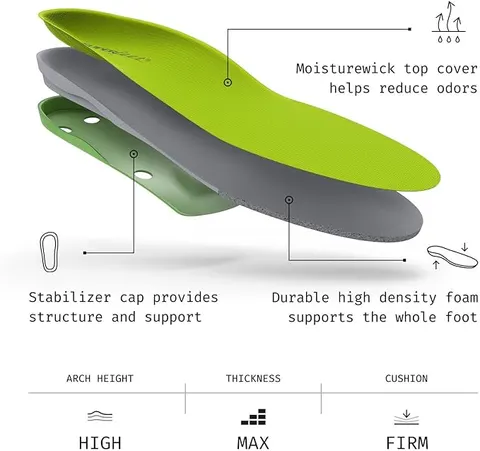
If your current shoes otherwise fit well, adding a rigid, deep-heel-cup insole like this one can rebuild the arch support that both conditions need, without buying an entirely new pair of shoes.
What we liked
- Deep heel cup stabilizes the heel strike
- Rigid shell reduces arch strain through the day
- Works inside most existing supportive shoes
Drawbacks
- Too rigid to pair with already-soft, unstructured shoes
- Takes up volume — check fit before buying
- Not a substitute for a properly fitting shoe
Who should buy it
Anyone whose shoes fit well otherwise but lack enough built-in arch support.
Who should avoid it
Soft, minimal shoes with no room for an aftermarket insole.
Read our full Superfeet GREEN review →
Why plantar fasciitis and flat feet overlap so often
The plantar fascia is a thick band of tissue running along the bottom of the foot, from the heel to the base of the toes, and it plays a real role in holding the arch's shape under load. When the arch is already flattened, that band gets stretched further with every step, which is exactly the kind of repeated strain that leads to plantar fasciitis in the first place. That's why the two conditions show up together so often — it's not a coincidence, it's cause and effect.
This also explains why treating them separately doesn't always work. A shoe built purely to cushion heel pain, with no real arch support, can leave the underlying flat-foot mechanics untouched, and the fasciitis often comes back. A shoe built purely for arch support without enough cushioning under the heel can aggravate an active flare-up. The shoes above are chosen because they handle both sides of the problem at the same time.
Shoes help, but they're not the whole treatment
Calf stretching, morning stretches before your first steps, and short bouts of rest from high-impact activity all matter alongside footwear. See our
flat feet exercises and stretches guide for a routine that pairs well with the shoes above.
What actually matters in a shoe for both conditions
- A firm heel counter. This locks the heel in place at the moment of impact, reducing the strain that travels into the plantar fascia.
- Real arch support, not just a soft footbed. A supportive midsole that resists collapsing inward takes over work the fascia would otherwise have to do.
- Enough heel cushioning to absorb impact. Especially important during an active flare-up, before other structural support even becomes relevant.
- A slight heel-to-toe drop. A completely flat (zero-drop) shoe increases tension through the calf and plantar fascia during the healing phase; a moderate 8-12mm drop is usually more comfortable.
If pain persists for more than a few weeks despite a supportive shoe, or is severe enough to change how you walk, that's worth a visit to a podiatrist rather than trying to shoe your way out of it — see our medical disclaimer for more on where this site's advice ends and professional care should start.
Frequently asked questions
Can the right shoes alone fix plantar fasciitis?
Shoes can meaningfully reduce strain and discomfort, but plantar fasciitis usually responds best to a combination of supportive footwear, calf and foot stretching, and short-term activity modification. If pain persists for more than a few weeks, see a podiatrist.
Should I wear supportive shoes even at home?
Yes, if that's practical for you. Walking barefoot or in unsupportive slippers at home is a common reason plantar fasciitis doesn't improve despite good shoes elsewhere in the day.
Do I need a shoe or an insole, or both?
It depends on your current shoes. If they already fit well and just lack support, a rigid insole like the Superfeet GREEN can be enough. If the shoe itself is unsupportive, replacing it is usually more effective than adding an insole on top.