Research-based review
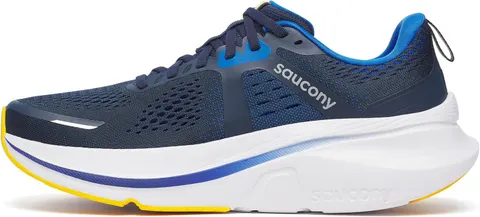
Saucony Guide Review: A Budget Stability Shoe for Flat Feet?
Research by Arshak Nersisyan · Published July 18, 2026 · 5 min read
Short version: the Guide doesn't have the brand recognition of the Adrenaline GTS or Gel-Kayano, but it delivers genuine mild-stability support at a noticeably lower price — a sensible entry point if you're not sure how much shoe you need yet.
This post contains Amazon affiliate links. We may earn a commission on qualifying purchases at no extra cost to you. See our
affiliate disclosure.
Our score breakdown
Scored out of 10 using the same methodology across every review on this site — see how we score for the full criteria.
A lighter take on stability
Saucony's PWRRUN foam is softer and lighter underfoot than the firmer polyurethane structures used in shoes like the New Balance 990, and the Guide builds a supportive medial construction into that foam rather than a rigid separate post. The result, based on published specs and consistent buyer feedback, is a shoe that feels closer to a neutral trainer than a corrective device — support is present, but understated.
Where the lower price shows up (and doesn't)
The Guide typically costs meaningfully less than the Adrenaline GTS or Gel-Kayano. That savings doesn't show up as an obviously cheaper-feeling shoe in most feedback — the cushioning and upper construction hold up reasonably well. Where it does show up is outsole longevity: buyer feedback suggests the outsole rubber wears faster under heavy mileage than the premium options, which matters more for daily runners than occasional walkers.
Good for testing your needs
Because its support is lighter than the Adrenaline GTS or Gel-Kayano, the Guide works well as a way to gauge how much structure you actually need before spending more on a firmer shoe. If it feels insufficient, that's useful information for your next purchase.
Fit
Available width options are narrower than competitors like the New Balance 990 or Brooks Adrenaline GTS, which is worth checking before buying if you have a noticeably wide forefoot alongside your flat arch.
Where it falls short
- Support ceiling. Not enough structure for severe overpronation or significant arch collapse.
- Durability. Outsole wear tends to show up sooner than premium stability shoes under high mileage.
- Width range. Narrower size range than some competitors.
Who this shoe is right for
Good fit
Budget-conscious runners and walkers with mild overpronation who want a lighter-feeling stability shoe.
Look elsewhere if
You need firm, structured motion control — the ASICS Gel-Kayano is the more structured option.
Wondering if the extra cost of a premium shoe is worth it? See our Saucony Guide vs. ASICS Gel-Kayano comparison.
Bottom line
The Guide is a sensible, lower-cost way to get real mild-stability support without committing to a premium price point. It's not the shoe for severe overpronation, but for a large share of mild flat-feet cases, it does the job.
Frequently asked questions
Is the Saucony Guide enough support for flat feet?
It offers mild stability support, which is enough for many people with mild-to-moderate flat feet, but those with more significant arch collapse typically need a firmer shoe like the ASICS Gel-Kayano.
Is the Saucony Guide a good first stability shoe?
Yes, its lighter, less aggressive support structure and lower price make it a reasonable starting point for testing how much stability you actually need before investing in a premium shoe.